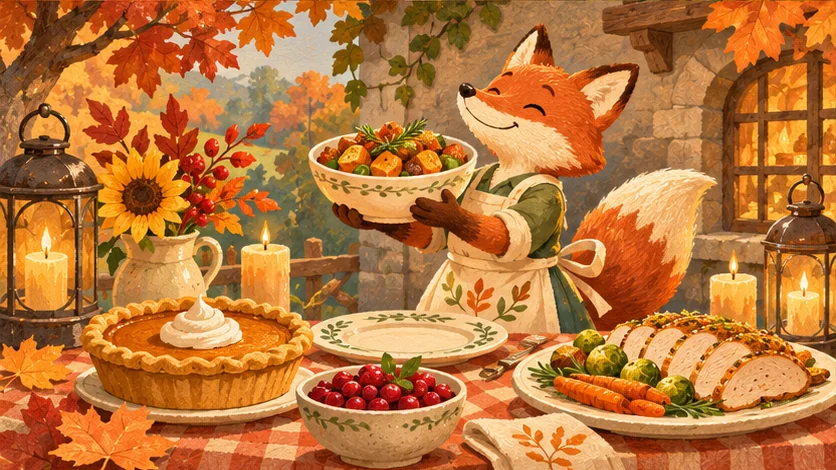
About Dinner Rush
Dinner Rush is a Thanksgiving restaurant-game template starring a friendly fox chef. Assemble mashed potatoes, roasted vegetables, cranberry sauce, and pumpkin pie by tapping ingredients in the requested order. The proposed order cards and patience meters make remembering sequences and choosing the next guest equally important.
Create your own version from this MakeGame design, which proposes a two-minute shift and rewards accurate, quick service. Keep requests readable and touch targets large. Warm dinner-table illustrations should support serving decisions, while a results screen gives players a reason to try another approach.
How to play
- Read one complete order before choosing ingredients. Identify both what the guest wants and the sequence shown, then check that guest’s patience meter before beginning the plate.
- Assemble the request carefully, confirming each accepted ingredient. Speed helps only when the order is correct; a rushed wrong selection can interrupt the rhythm of the whole table.
- After serving, compare the remaining guests’ patience and request complexity. Continue through the two-minute shift, then review the result to decide whether accuracy or serving priorities need more attention.
Controls
- Tap or click the ingredient buttons in the order shown on the guest’s card. Keep dish pictures and ingredient labels consistent between the menu and the request.
- Use the same large targets for touch and pointer input. Separate neighboring ingredients enough that a fast tap does not accidentally select two different parts of a meal.
A few helpful tips
- Learn the ingredient positions early. Familiar locations reduce the time spent searching the menu and leave more attention for reading the next order correctly.
- Look for the guest most likely to run out of patience, while checking whether their request is realistic to finish. A low meter is useful information, not a reason to tap without reading.
- When adapting the template, explain how a wrong ingredient is handled. A clear correction rule is more helpful than silently discarding a plate or changing the active order.
Create your own Dinner Rush game
Keep the part you love and change the character, setting, or challenge. Add one of these twists to the starter idea below.
- Create a practice service with one guest at a time and no patience loss. Introduce the full table only after the menu and order sequences feel familiar.
- Make a vegetarian harvest café with a new illustrated menu. Preserve recognizable ingredient shapes and rewrite each order card to match the dishes.
- Try a family potluck version in which guests request dishes for a shared table. Use a visible collection goal instead of individual patience meters.
Your game starter
Create a cozy Thanksgiving restaurant game starring a friendly fox chef. Assemble guest orders from mashed potatoes, roasted vegetables, cranberry sauce, and pumpkin pie by tapping ingredients in the correct order. Show simple order cards and patience meters, reward accurate quick service, and run a two-minute dinner shift. Include a results screen, restart, and large touch targets with warm illustrated dinner-table scenery.
Create from this templateOpens the MakeGame creator, where you can edit the idea. Generation uses your account and available credits.
Good to know
Is Dinner Rush a recipe or a restaurant-management game?
The starter focuses on reading requests and assembling meals during a short service. It does not specify real cooking times, ingredient quantities, staffing, or a business economy. Those systems would expand the game beyond this compact order-and-serve design.
How can I make the rush feel fair on a phone?
Use large separated buttons, readable order cards, and patience meters that remain visible while selecting ingredients. Give feedback immediately after each choice. Increase pressure through clear requests and timing rather than tiny targets or ambiguous food illustrations.